Media and blogs
Highlight of Summer Internship Experience - Meeting Dolores Huerta, Summer 2026
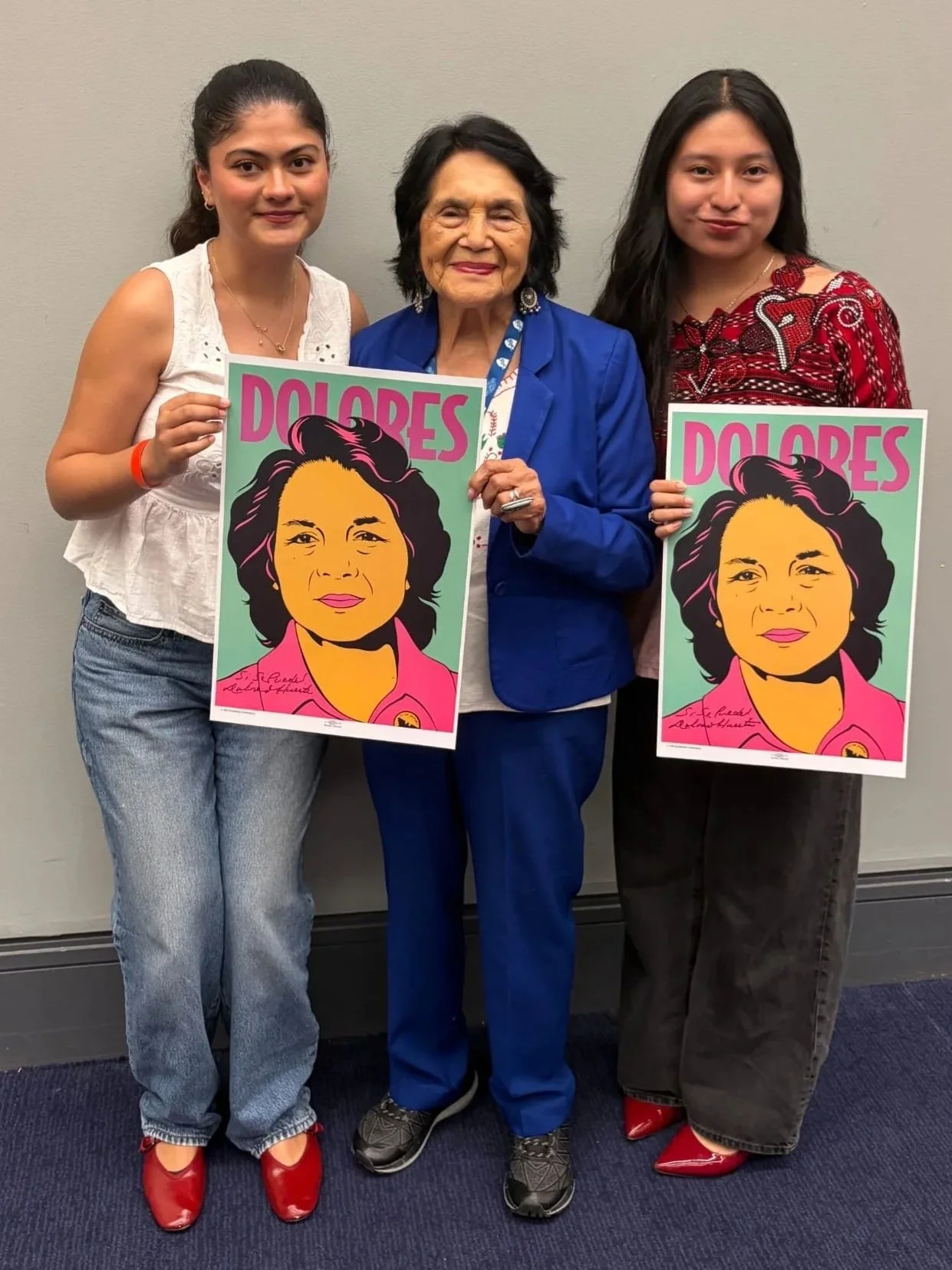
What made the experience even more meaningful was hearing directly from Dolores during the post-screening discussion. She reflected on her decades of organizing, shared lessons from her journey, and answered questions from the audience with the same passion and determination that have defined her life's work.
Her words were both inspiring and motivating. She challenged the next generation of organizers—including ourselves—to continue building the labor movement with courage, compassion, and purpose. She reminded us that meaningful change is only possible through solidarity, collective action, and a commitment to serving others. Most importantly, she emphasized that the labor movement remains strong because each generation carries forward the stories, struggles, and victories of the communities that came before us, building on their legacy to create a more just future.
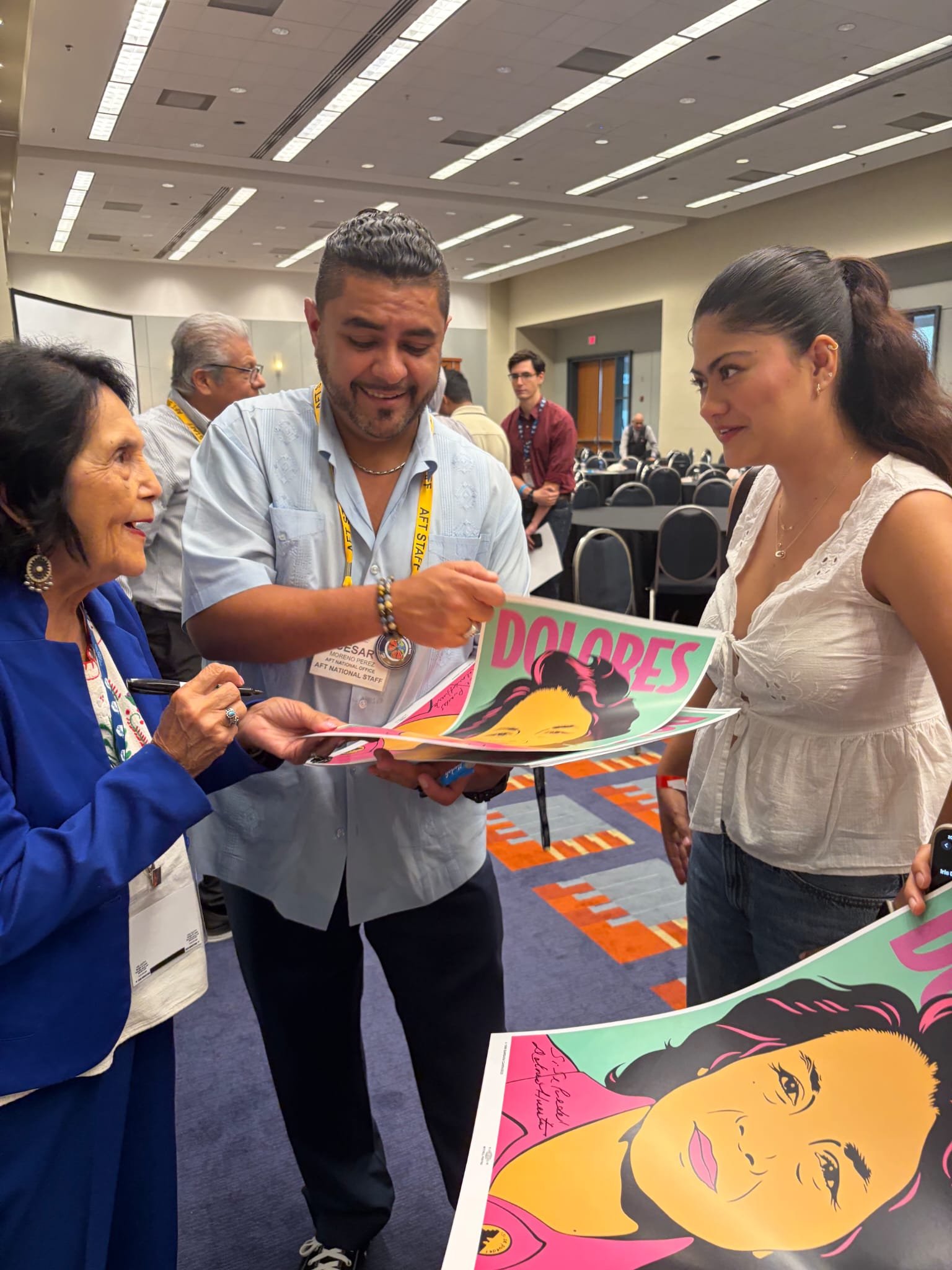
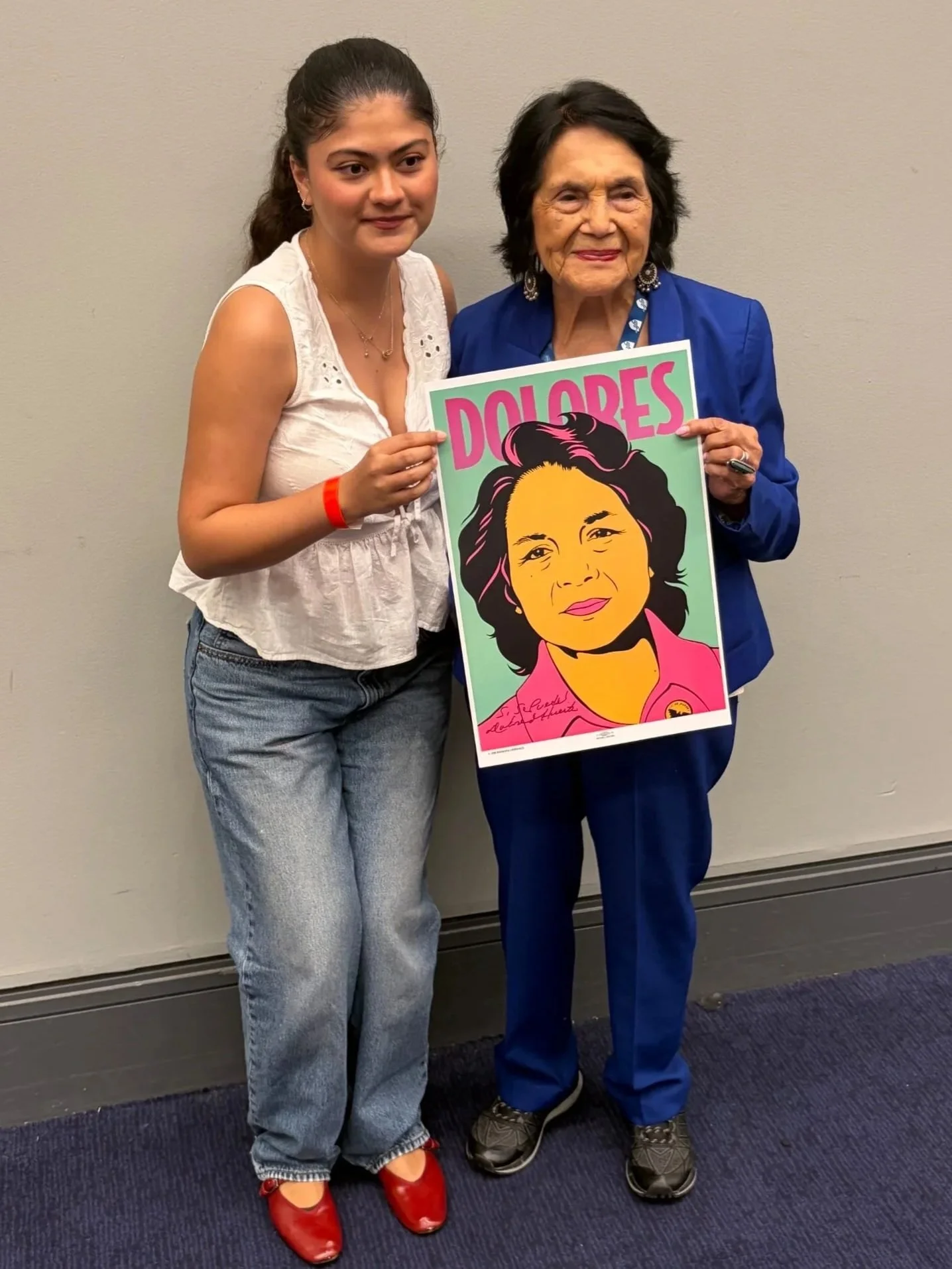
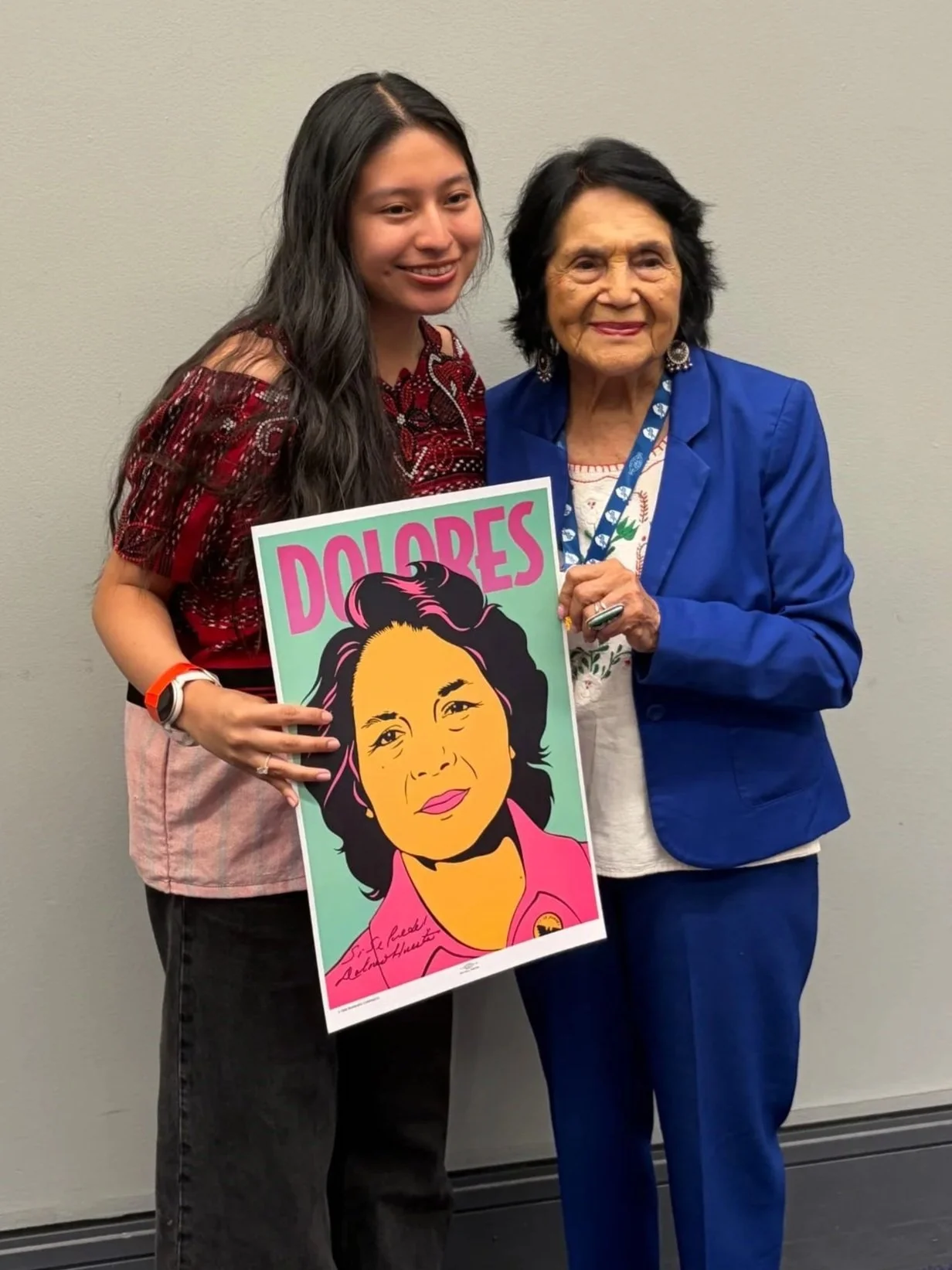
One of the highlights of our summer with LCLAA was the opportunity to meet Dolores Huerta. Thanks to the AFT, we attended a screening of Dolores, where we had the privilege of speaking with her before and after the film. Sharing space with someone whose lifelong work has inspired generations of activists and transformed the labor and civil rights movements was an experience we will never forget.
The documentary was incredibly moving, capturing Dolores Huerta's lifelong fight for workers' rights, racial justice, and equality. It served as a powerful reminder that lasting change is often driven by courageous individuals whose contributions are not always fully recognized.
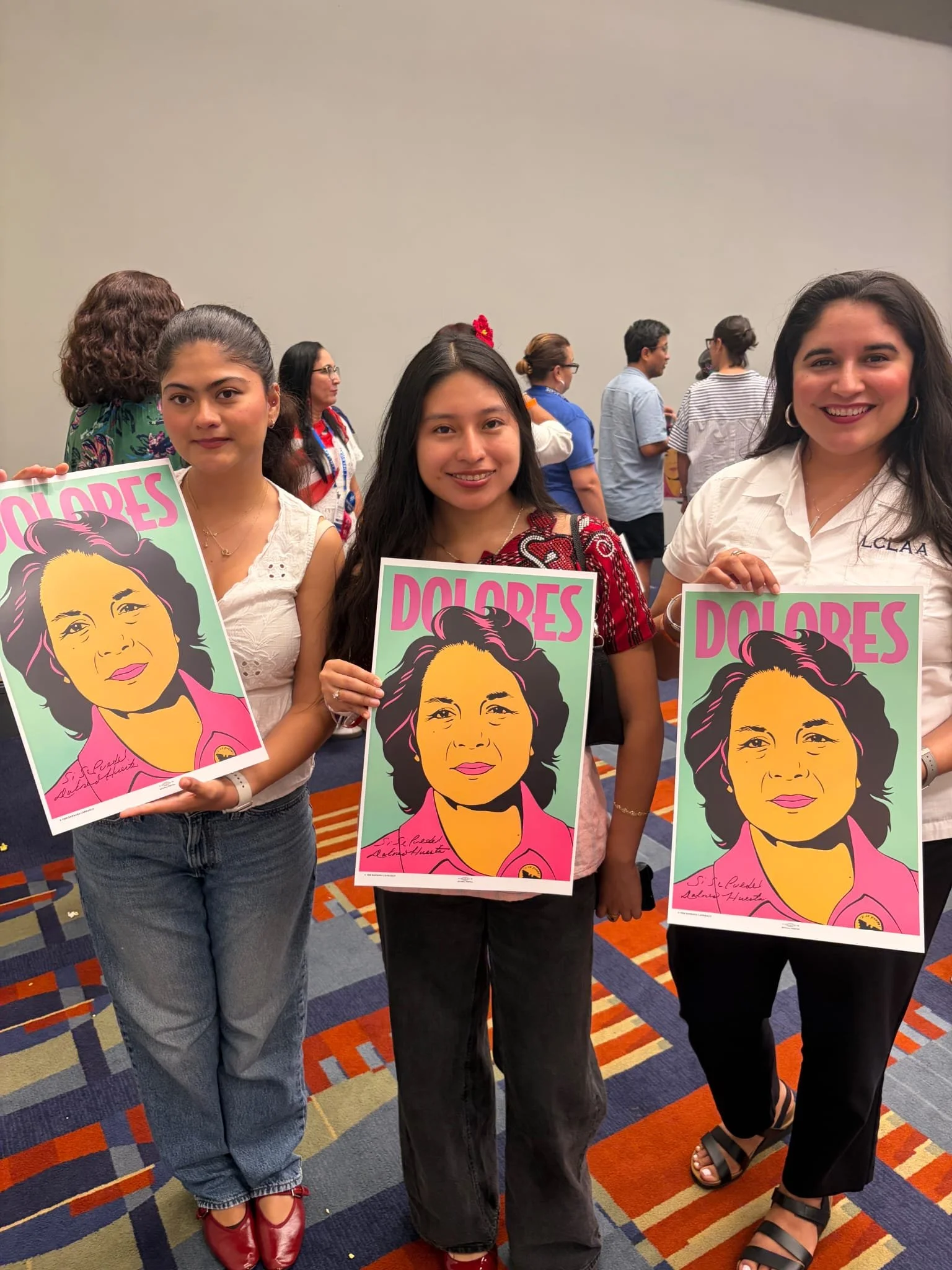
“My parents lived in Stockton for a couple years when they first immigrated to this country, so I grew up learning about the United Farm Workers movement and Dolores’ legacy. As a young Latina, I admire her leadership and the way she used her voice to create space for herself and other women to lead, even in an overwhelmingly male dominated space. Seeing her light up a room when speaking and help bring a voice to marginalized farm workers was electrifying. Her resilience, sacrifices, and unwavering commitment to what she truly believed in really moved the entire audience.” - Keyla Amador, LCLAA Intern
“To me, this opportunity was a reminder that my voice and my community's voice have the power to create meaningful change. As someone pursuing public service, I was inspired by Dolores Huerta’s story, which placed in me a commitment to use advocacy to ensure workers who have been historically overlooked have an opportunity to uplift their voices.
I admire Dolores Huerta’s story because she constantly had to persevere and challenge sexism she encountered throughout her career while at the same time balancing being a mother and holding leadership positions. As a result, her determination resulted in her becoming an instrumental labor advocate. At the same time demonstrating that the labor movement represents everyone willing to organize and advocate for justice. “ - Iris De Leon, LCLAA Intern
One of the most powerful aspects of the film that touched us the most was its portrayal of sexism and machismo Dolores faced within both the United Farm Workers and broader labor movement. Even as the only woman at the front of the movement, she led with unwavering power. Her story reminded us that we must keep pushing for gender equity and women’s rights in all spaces. Women are equally as deserving as men to be in leadership positions, and change is only made when we stop taking “no” for an answer.
Meeting Dolores Huerta in person made that night even more meaningful. Hearing her wish us the best in our careers was emotional and affirming. We truly believe she helped pave the way for young Latinas like us to pursue careers in advocacy and public service with confidence. We never imagined having the opportunity to intern with an organization as impactful as LCLAA in our nation's capital, let alone meet a historic leader like Dolores Huerta. We are leaving Washington, D.C., feeling humbled, inspired, and more committed than ever to making a meaningful difference in our communities.
We thank LCLAA for the opportunity to delve into activist opportunities such as these. As advocates, we strive to follow Dolores Huerta’s steps and convey LCLAA's commitment to representing Latino workers and elevating the voices of those overlooked and too often underrepresented.
Closing the Gap: Equal Pay and Workplace Justice
June 17 is LGBTQIA+ Equal Pay Awareness Day. It is a powerful reminder of the persistent workplace inequities LGBTQIA+ people within and outside the Latino community face and a collective call to action to fight for a future where all of our work and contributions are valued equally, regardless of gender identity or sexual orientation.
While laws like the Civil Rights Act of 1964 exist, LGBTQIA+ people, including women, immigrants, Latines, and other marginalized identities continue to face unsafe workplaces and significant wage disparities. Given increasing anti-LGBTQIA+ bills and changes to the Equal Employment Opportunity Commission (EEOC), the national agency in charge of ensuring that workplaces are free of discrimination and harassment, many workers feel they have little to no viable options to seek justice.
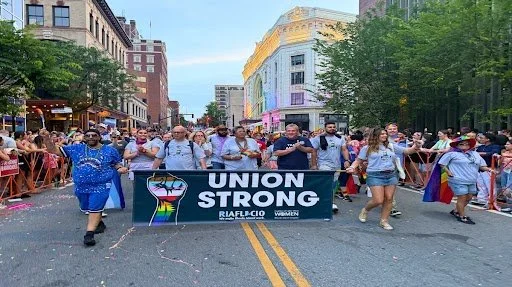
On average, LGBTQIA+ workers earn around 90 cents for every dollar their heterosexual, cisgender counterparts make. This pay gap becomes even greater when looking at other subgroups such as Black LGBTQIA+ women (85 cents), Latine LGBTQIA+ women (72 cents), and gender non-binary people (70 cents). Many Latine LGBTQIA+ individuals are penalized for being members of multiple identities, for example for being Latine, queer, and a woman.
These gaps represent more than statistics; they reflect lost wages, limited economic stability, fewer job opportunities, and restricted generational wealth and retirement security for millions of working people. When Latine LGBTQIA+ folks are underpaid, the effects ripple beyond individual paychecks, impacting entire households, social networks, and local economies dependent on their labor and spending power.
In addition to pay, fair treatment also means safe, respectful workplaces where workers feel valued and protected. Yet, harassment and discrimination persist, making the workplace a source of fear, not safety. Federal laws prohibit discrimination based on race, sex, religion, and disability at work, but too many workers fall through the cracks. A 2024 UCLA study found that 59%—6 in 10—nonbinary people have experienced workplace harassment, highlighting the gaps between legal protections and workers' day to day realities. Harassment and discrimination harm more than jobs; they also damage mental health, finances, and long-term opportunities.
For many workers—especially, LGBTQIA+ individuals, Latinas, and non-Latina Black women—speaking out carries real risks, including retaliation, job loss, or stalled careers. As a result, harmful behavior often goes unreported. At the same time, the Equal Employment Opportunity Commission (EEOC), has rolled back important guidance that helped employers and employees understand how anti-harassment protections actually function in practice.
Stronger protections for workers are needed now more than ever.
That is why the Equal Pay Today campaign, a coalition of equal rights advocates that includes LCLAA, is calling on the Equal Employment Opportunity Commission (EEOC) to protect all workers and maintain the collection of EEO-1 demographic data. The coalition is also urging Congress to pass the Bringing an End to Harassment by Enhancing Accountability and Rejecting Discrimination (BE HEARD) in the Workplace Act.
The BE HEARD Act would strengthen workplace protections and help ensure every worker is treated with dignity, safety, and fairness. If passed, it would expand national anti-discrimination protections to workers who are often left behind, including those classified as "independent contractors" instead of employees—such as workers in agriculture, hospitality, domestic work, and caregiving. The bill would also extend protections to employees at small businesses with less than 15 workers and establish clear protections against discrimination based on sexual orientation and gender identity.
But our comunidad knows that laws alone are not enough. Workers also need real opportunities to build better lives for themselves and their families.
That is why unions remain one of the strongest tools workers have to protect their rights and improve their workplaces. At a time when anti-LGBTQIA+ attacks are increasing and workplace protections are being rolled back, unions provide a space where LGBTQIA+ and non-LGBTQIA+ workers can stand together, and demand respect and fair treatment that puts workers first. From the fight for the eight-hour workday, workplace breaks, and weekends, the labor movement has proven that when workers organize, they win.
On LGBTQIA+ Equal Pay Awareness Day, let us stand together—with our families, our communities, and the labor movement—to demand equal pay, workplace dignity, and fair treatment for all workers.
Take action today. Contact your members of Congress and urge them to support the BE HEARD in the Workplace Act. We must also continue pushing back against harmful EEOC rollbacks and demand the restoration of workplace protections that help keep workers safe from discrimination.
Every conversation helps build our movement. Share our BE HEARD Act one-pager with your coworkers, tías and tíos, family members, and friends. Together, we can build a future where every worker is heard, respected, and paid fairly regardless of who they are.
A letter From a Young Activist
To the workers, first-generation college students, and Latina women con sueños grandes, dudas, y miedos- I stand tall because of the labor and sacrifice of the people before me who decided to be courageous without guarantees and created the opportunities for my generation.
Growing up I witnessed my parents dance at family parties and they were always the first on the dance floor. Whenever they asked me to dance I always answered with “let’s wait for the other people.” I didn’t want to be the first one on the dance floor. When the dance floor is empty, it’s exposed- what if everyone saw the step I messed up, or my outfit was criticized, or I wasn’t natural at dancing? I laugh at these thoughts now because what if my parents had been too afraid to come to a new country? What if they were too scared to show up in a space that did not want them?
The hope from my parents carries my dreams. Their faith isn’t explainable, it isn’t tangible, but it is real. My dad worked as a busser; he cleaned more tables than he held his daughters.
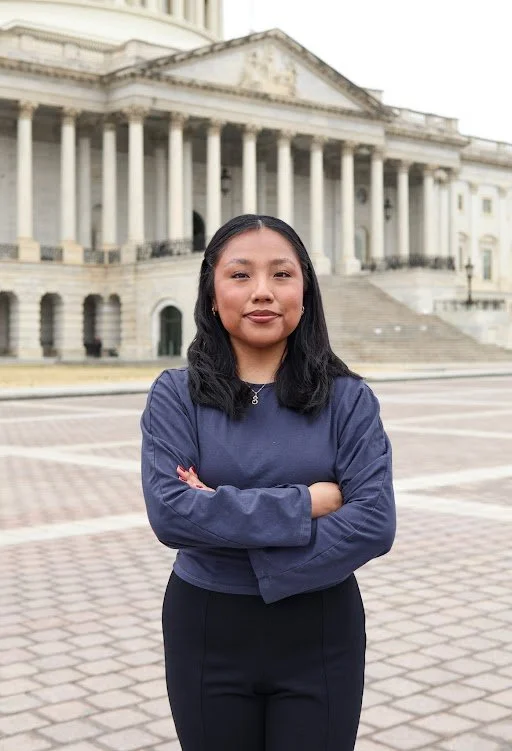
My mother crafted a loving home with her bare hands and made sure we never felt our father's absence. On some days, she was a single mother, and on some days, my dad was a lonely man; most days, they had more doubts than answers, yet they did not cave to fear or discontent, and their love always remained promising. My parents were forced to put trust in a possibility. They did not know if their daughters would enjoy learning, let alone be able to attend college; they both don’t have a high school diploma and earn the minimum wage. Still, they got up every morning and worked diligently for hours without end so that their daughters wouldexperience a different reality. A life where the hands of my sisters and I did not feel like their hands of sandpaper, and that our hobby did not become sleeping from exhaustion. My parents are not defined by their labor; they are defined by the love that is poured into their work. Without the laborers of love, who would I be? What voice would I represent?
As I graduate from college and begin my path in the labor and civil rights movement, as I take up space in politics and academia, I dance. Now, in my eyes, the presence of every worker, first-generation college student, and woman represents the laborers of love on that dance floor that I observed growing up. Dancing is about standing up even when no one else is with you; it's about being brave, being daring, and not letting fear stop you.
I have been honored to contribute and learn from the LCLAA team during my time in Washington, D.C. It is organizations like LCLAA that see workers the way I do, not defined by their jobs, but by the love, dignity, and the care they carry in their lives.
Mamá, Papá, gracias a Dios, sí se puede.
With love,
Ivonne Santiago
Former LCLAA Intern
-
![]()
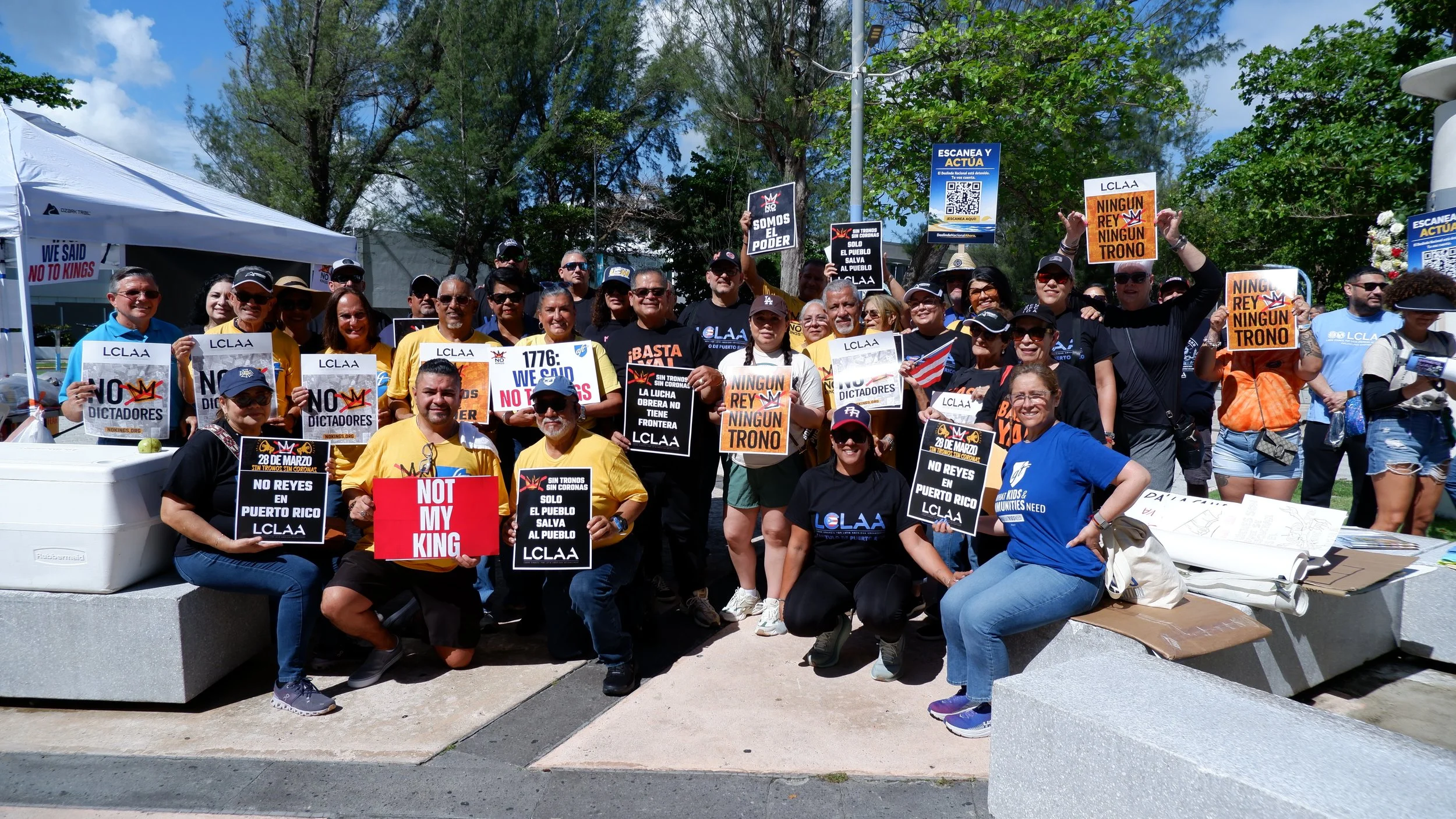
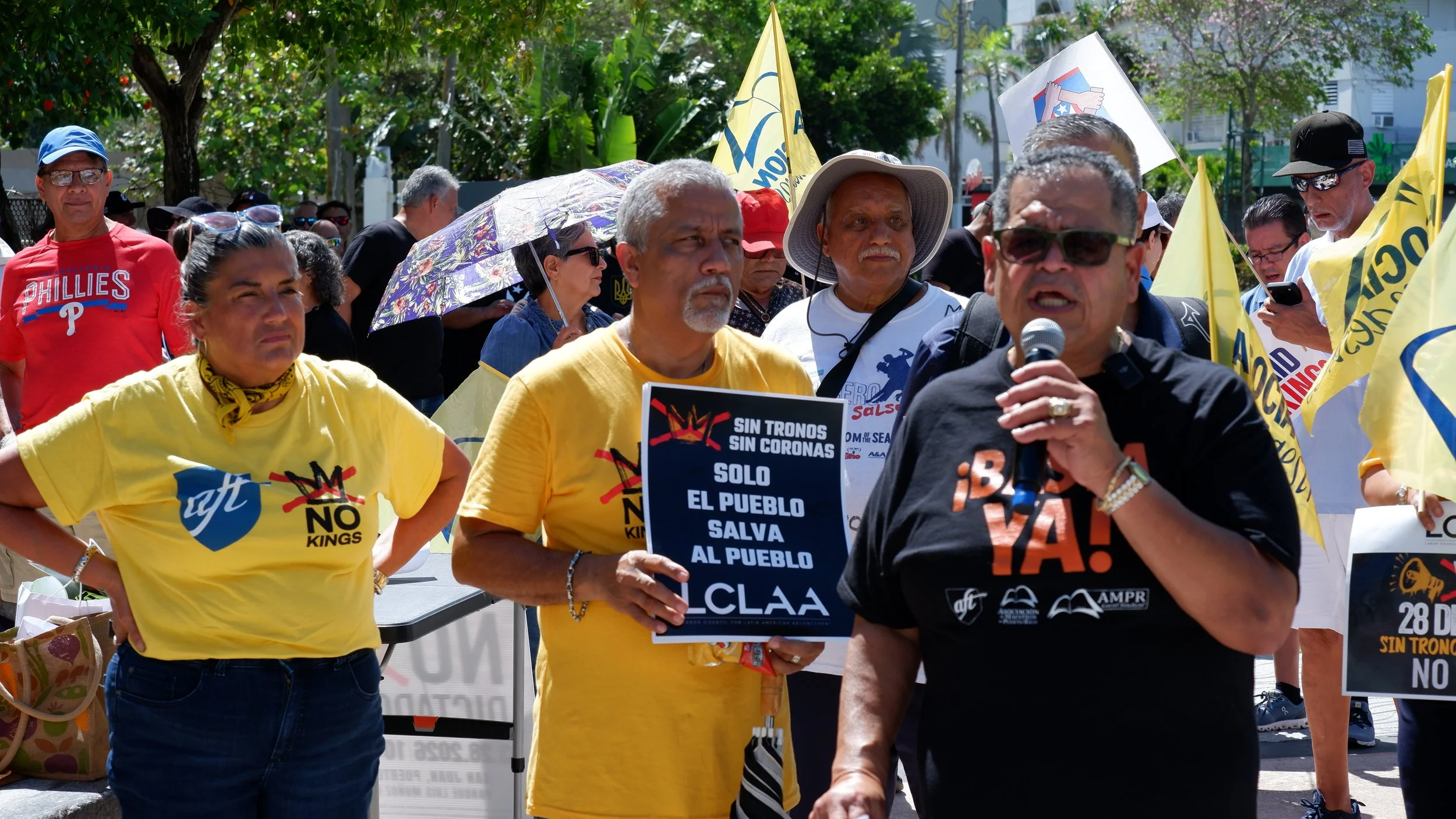
Manifestantes en protestas “No Kings” en P.R. reclaman derechos para trabajadores y denuncian alza en el costo de vida
MARIELIS ACEVEDO IRIZARRY, EL DIARIO DE NEW YORK
NUEVA YORK – En la primera movilización “No Kings” (Sin Reyes) en Puerto Rico convocada por grupos sindicales, los manifestantes enfocarán sus reclamos en la situación de los empleados federales en el territorio que han sufrido significativamente el impacto de lo que consideran políticas “anti obreras” de la Administración Trump.
-
![]()
Migrantes en EU se organizan para protestar: “¡Nosotros hacemos funcionar este país!”
BLANCA JUAREZ, SIN EMBARGO MX
Ciudad de México, 28 de marzo (SinEmbargo).- “¡No a los reyes!”. Es el grito colectivo que sonará hoy en prácticamente todo Estados Unidos durante la marcha “No Kings III”, la tercera protesta masivapor los abusos del Gobierno de Donald Trump en poco más de un año de mandato. Y entre la multitud, la población migrante buscará hacerse visible y dejar claro que su lucha no es marginal, sino central.
-
![]()
Separación y miedo: el costo humano de los operativos de ICE en familias inmigrantes
CARMEN RODRIGUEZ, EL TIEMPO LATINO
La detención de personas en operativos de inmigración alrededor del país va más allá de la legalidad de un caso. Cientos de familias están sufriendo la ausencia de quien guía, apoya económicamente, provee o es el pilar que mantiene al núcleo familiar fuerte y unido.
Este es el caso de la familia Orozco, quienes desde el 9 de enero pasado viven en la incertidumbre, luego de que el Servicio de Inmigración y Control de Aduanas (ICE) detuviera a Eustáquio Orozco, el padre, en Minnesota. -
![]()
La Necesidad Urgente de que los Latinos se Opongan al Proyecto 2025
JOSE VARGAS, EL TIEMPO LATINO
En el panorama siempre cambiante de la política estadounidense, permanece una constante: la necesidad urgente de proteger los derechos y la dignidad de nuestras comunidades. Durante mucho tiempo, los latinos han sido injustamente y erróneamente considerados chivos expiatorios de políticas y problemas sociales. Nos negamos a permitir que nadie dicte lo que nosotros, como pueblo, merecemos.
-
![]()
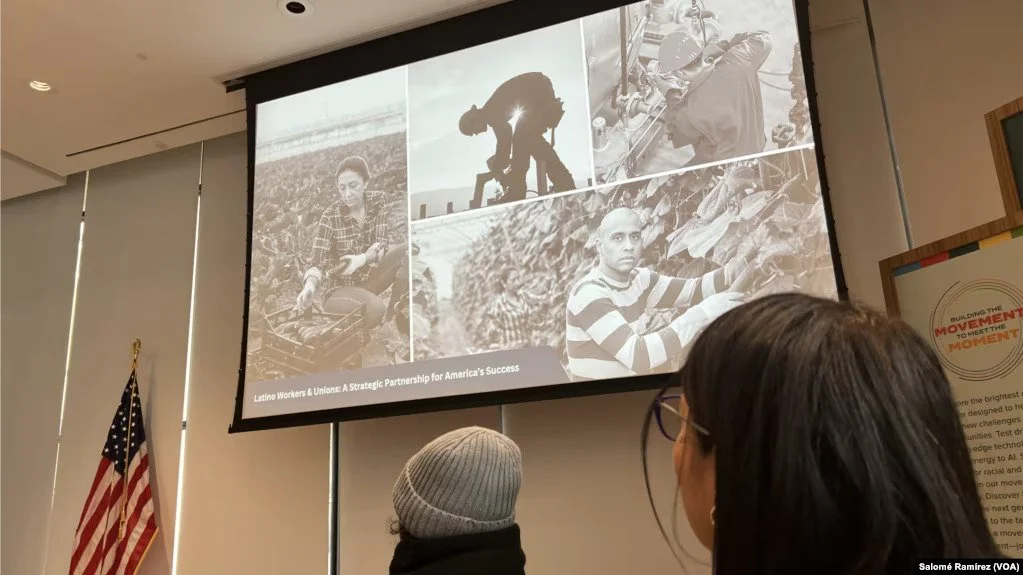
LCLAA expone disparidades socioeconómicas y de género de trabajadores latinos en su reporte anual
EL TIEMPO LATINO
El Labor Council for Latin American Advancement (LCLAA), principal organización nacional para los trabajadores latinos y sus familias, presentó este martes 30 de enero su informe anual “Trabajadores Latinos y Sindicatos: Una Asociación Estratégica para el Éxito de Estados Unidos” en su sede de Washington DC dentro de la American Federation of Labor and Congress of Industrial Organizations (AFL-CIO).
-
![]()
Latinos en EEUU continúan empleados en las industrias “más inestables y peor pagadas”
VOZ DE AMERICA
Los latinos en Estados Unidos representan alrededor del 18 % de la fuerza laboral en todo el país, sin embargo, continúan enfrentando obstáculos en industrias inestables y mal pagadas, de acuerdo con un reporte publicado por el Consejo Laboral para el Avance del Trabajador Latinoamericano (LCLAA).
-
![]()
La Igualdad Salarial Latina Requiere Reflexión, Alianza y Acción
LA OPINION
Por Yanira Merino
Necesitamos desmantelar la discriminación de género en los centros de trabajo ahora, reconocer la igualdad de pago por las mismas horas trabajadas y tejer estas necesidades y valores esenciales de las mujeres, madres, abuelas e inmigrantes de color
-
![]()
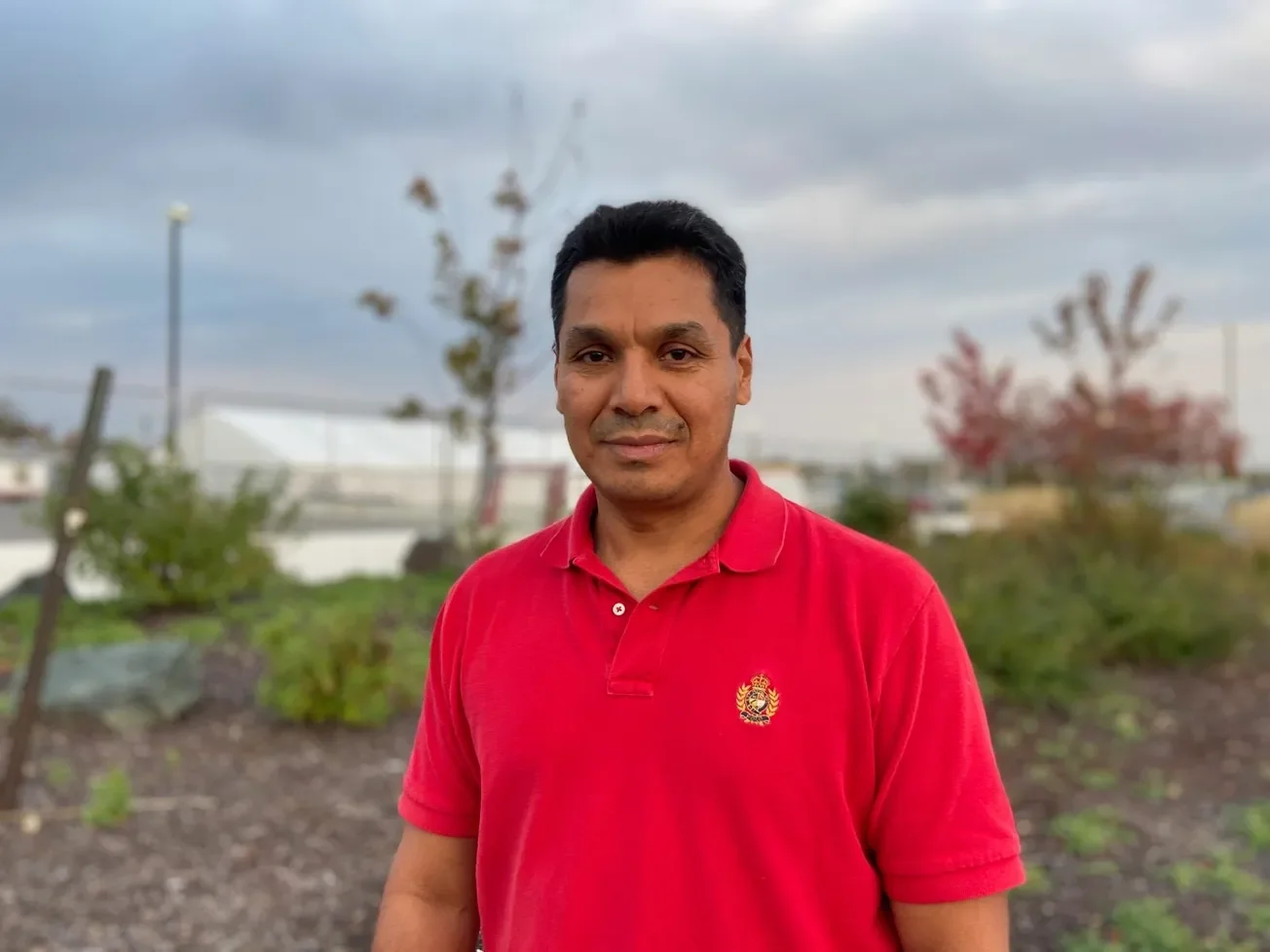
Yanira Merino: “La lucha de los inmigrantes es la lucha de los trabajadores”
EL TIEMPO LATINO
Yanira Merino, creció en El Salvador viendo cómo su abuelo, un sindicalista comprometido se organizaba cuando se gestaba la guerra civil del país que duró más de una década.
-
![]()
LCLAA Pittsburgh, apoyando la clase obrera latina
LA MEGA NOTA
Por Hugo Martin
Son muchos los retos y obstáculos que enfrenta la comunidad hispana en su lugar de empleo. En Pittsburgh existe una organización de nivel nacional que representa los intereses de los trabajadores hispanos en los Estados Unidos: LCLAA, el Consejo Laboral para el Avance Latinoamericano.
-
![]()
EXPLAINER: How is inflation affecting commuting costs?
THE ASSOCIATED PRESS
Gas prices have fallen from the record highs they reached earlier this summer, but they’re still much higher than a year ago. And with inflation driving up the cost of pretty much everything else, finding the funds to cover your commute may be increasingly tricky.
-
![]()
The New American Strike-Wave
UNIVISION 24/7
In this Spanish-language interview with Univisión 24/7, LCLAA National President Yanira Merino explains what is behind the strike wave in the US and what challenges workers face when they try to organize.
-
![]()
Enmienda para defender los derechos laborales y de los trabajadores en Illinois.
UNIVISION CHICAGO
Illinois es el único estado de la región que al día de hoy no interfiere directamente en el derecho constitucional de los trabajadores de negociar colectivamente.
-
![]()
The Pandemic Shows Latino Workers the Need for Union Organizing
LATINO REBELS
Even as the nation continues to grapple with the Delta variant amid an ongoing COVID pandemic, economic recovery is underway and new research from the UCLA Latino Policy and Politics Initiative indicates that unionized jobs must pave the path forward to ensure that workers have the stability and economic resilience needed to withstand future crises.
-
![]()
USW health care members rally with refinery workers in Beverly Hills
UNITED STEELWORKERS
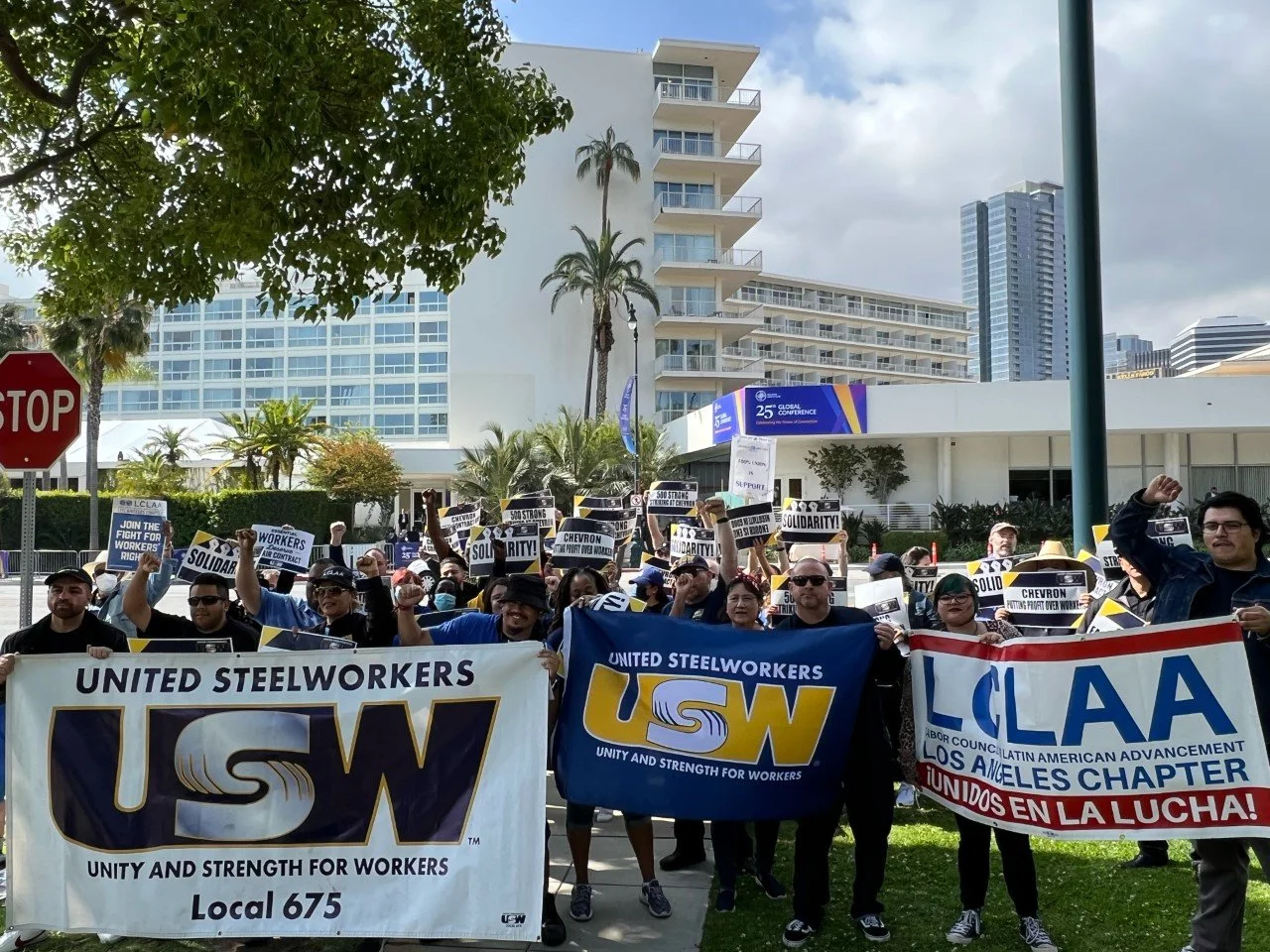
LCLAA Los Angeles supported USW Local 7600 as they entered their sixth week of a strike.
-
![]()
Why casino workers are on strike in Cambodia – and how to help
THE STAND
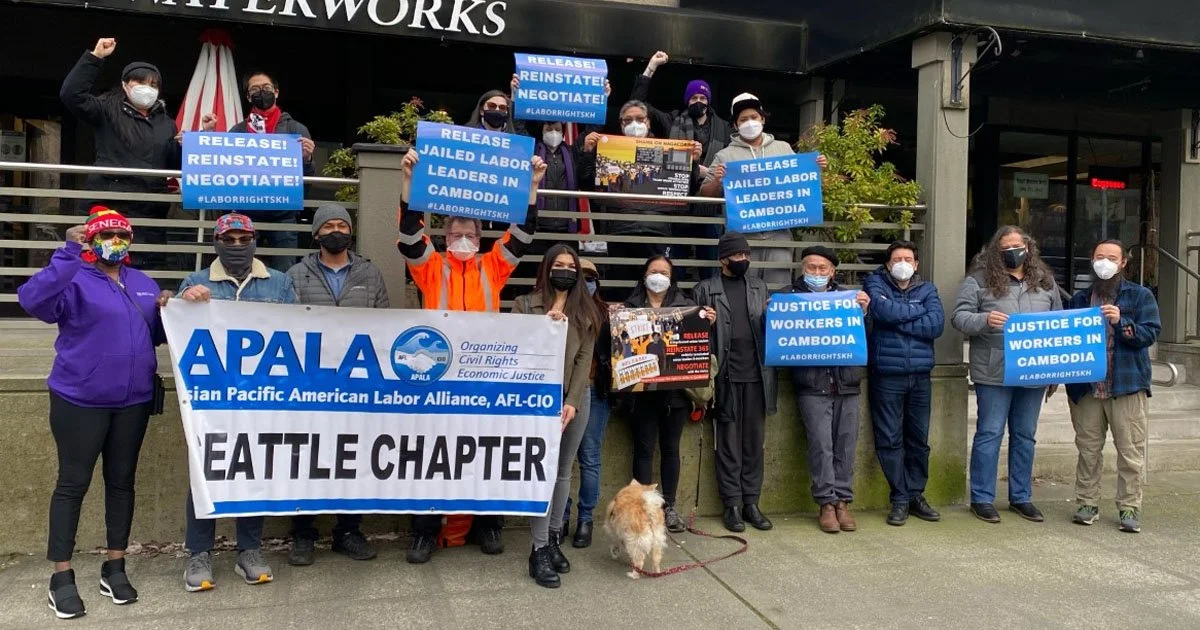
A multi-million dollar casino company in Cambodia terminated 1,329 workers — 1,100 of them being union members and activists. Members of LCLAA Pacific Northwest chapter participated in a Global Day of Action to show solidarity with the LRSU.
-
![]()
Latinos, excluded from Hollywood, urged to back film, TV labor
NBC NEWS
LCLAA National shared solidarity with the International Alliance of Theatrical Stage Employees (IATSE) in its fight for shorter hours, sustainable wages, fair pay from digital, and safer workplaces — despite the union's poor and murky record on diversity hiring.
-
![]()
Vacúnate con fe
ORLANDO SENTINAL
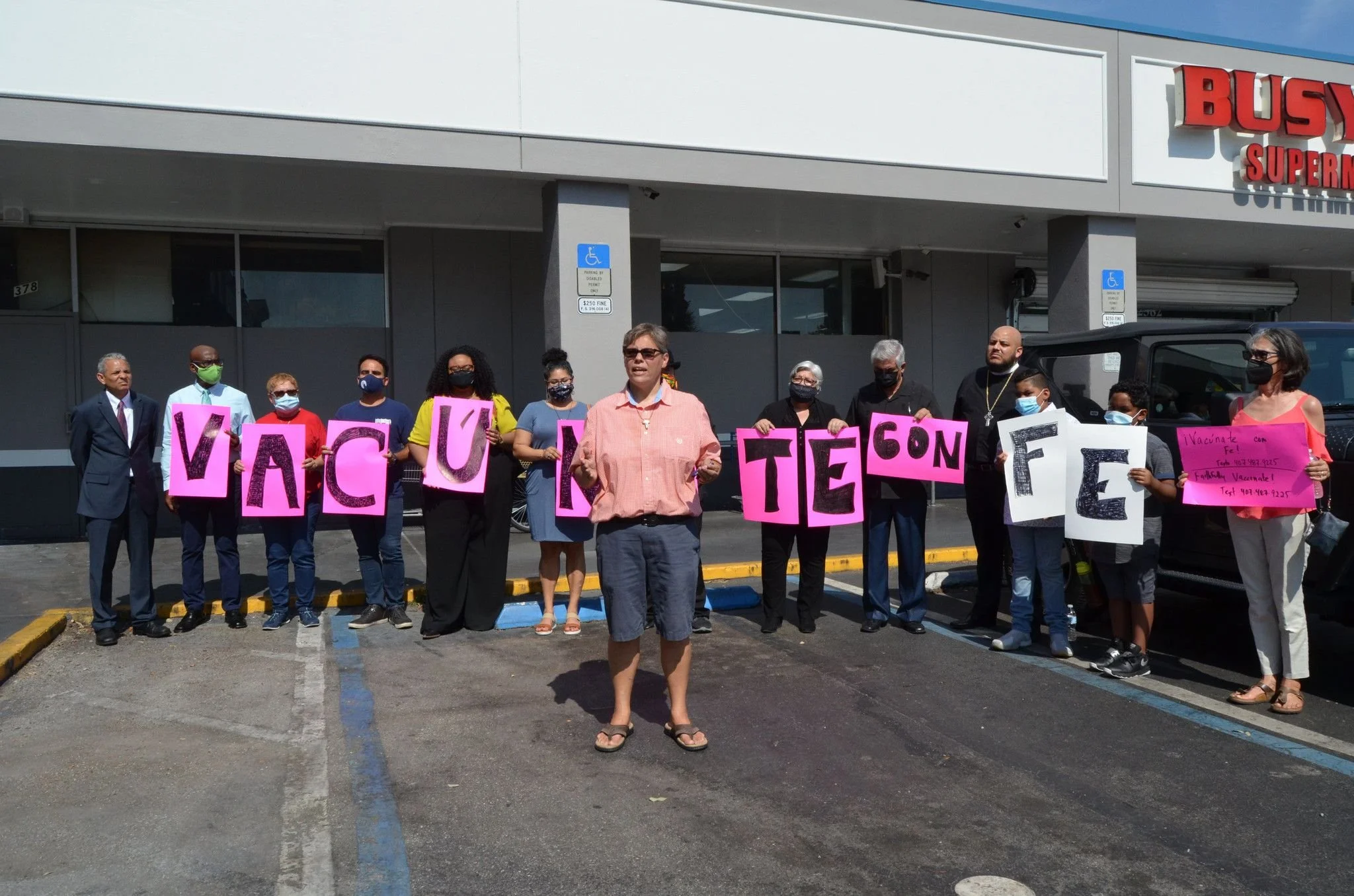
Read about the partnership between communities of faith and other civil society organizations, including LCLAA Central Florida, seeking to provide reliable information about and access to the Covid-19 vaccine.
-
![]()
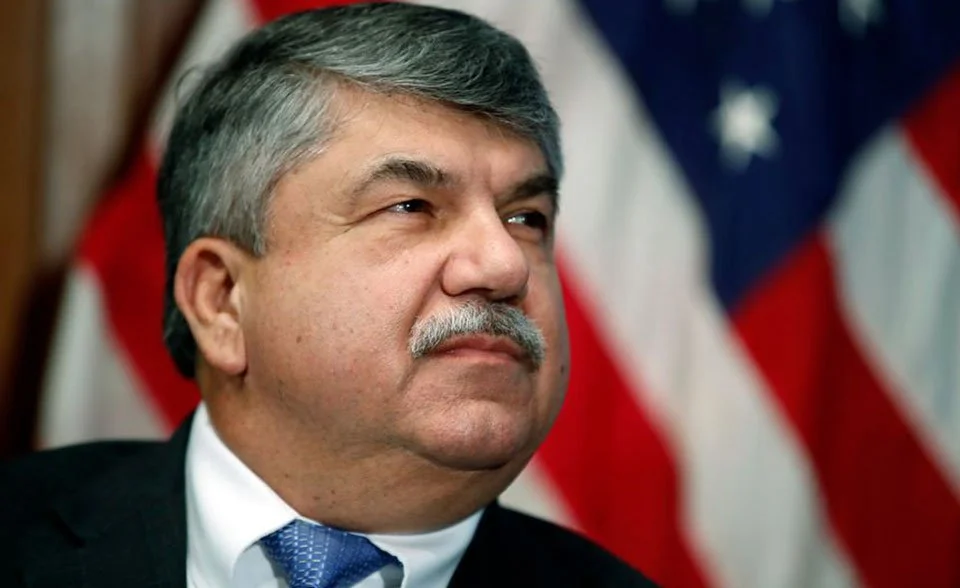
In final speech, Trumka said labor’s fighting for democracy under siege
PEOPLE’S WORLD
In what turned out to be his final address to a union crowd, the late AFL-CIO President Richard Trumka declared organized labor is fighting not just for itself, but for “democracy, which has been under siege.”
-
![]()
Life and Death in the Poultry Capital of the World
THE NATION
Six workers were killed in a chicken plant in Gainesville, Ga. The community is demanding answers.
-
![]()
‘We will not beat this pandemic until we stop the spread of the virus at work’: Liz Shuler
MARKET WATCH
AFL-CIO President Liz Shuler had some strong words for the Supreme Court justices, and their ruling to stay enforcement of the Occupational Safety and Health Administration’s vaccine mandate, saying the organization was “disappointed” in the court’s decision.
-
![]()
Chicago Tonight: Latino Voices
WWTV CHICAGO
Hear Chicago LCLAA Chapter President Jose Alcala discuss the history and future of the Labor Movement on WWTV
-
![]()
Celebrating Latinx, Filipino, and all immigrant workers
As Latinx and Hispanic Heritage Month and Filipino American History Month come to a close, we have the opportunity to reflect on the contributions and rich histories of Latinx and Filipino workers both locally and around the world.
-
![]()
Diverse array of voices echoes through Downtown streets to celebrate May Day
PITTSBURGH UNION PROGRESS
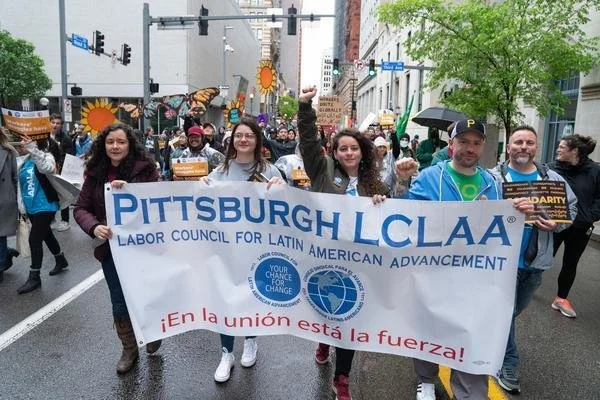
A diverse group of more than 100 people streamed from the United Steelworkers headquarters on the Boulevard of the Allies at 6:30 Monday night so they could carry their May Day message to the damp streets of Downtown Pittsburgh.
-
![]()
"Los inmigrantes siguen llegando y la lucha no termina porque los retos todavía son monumentales"
LA POLITICA ONLINE
Por Yanira Merino
Yanira Merino es la primera mujer inmigrante indocumentada en liderar el Consejo Laboral para el Avance de América Latina (LCLAA). Fue elegida presidenta en 2018 después de un largo camino como líder laboral y defensora de los derechos de los inmigrantes.
-
![]()
Union members renew commitment to social justice at APALA and LCLAA conventions
Labor activists across the United States renewed their commitment to social and economic justice at the Asian Pacific American Labor Alliance (APALA) and Labor Council for Latin American Advancement (LCLAA) conventions, both held the first week of August.